


Fungi of the human nail plate of the hands and feet are quite widespread.Onychomycosis refers to an impact on the structure of the nail (generally the big toe) by a parasitic fungus, followed by destruction.This causes a lot of problems and the treatment itself: the need for regular therapeutic procedures, the possibility of surgical intervention, a long recovery period and the risk of relapse.Compliance with preventive measures will reduce the risk of infection, but does not guarantee complete safety from the fungus.
Factors contributing to disease
Nail fungus of the big toe has increased vitality.It stays outside the human body for a long time.Floors, sports and shower mats, benches, benches, shoes represent what we call the “waiting place”.Once in a favorable environment (high humidity, heat, the presence of microcracks, calluses and corns on the lower extremities), the fungus quickly penetrates the tissues and begins to multiply intensively.
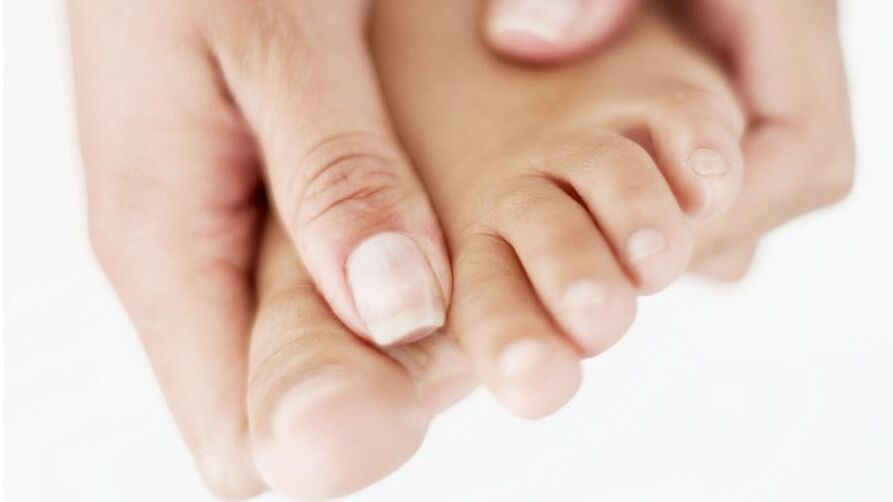
Strong immunity prevents the growth of fungi, thereby quickly defeating foreign bodies.In a weakened state, protection is not as effective.The reasons that reduce the protection forces are different:
- Failure to comply with hygiene standards.
- Disorders of the functioning of the endocrine system.
- Presence of skin lesions on the fingers and toes.
- Presence of dermatological diseases.
- Increased sweating of the lower limbs.
- Orthopedic pathologies.
- Failure of the metabolic process.
- Varicose veins
- Seropositive reaction and immunodeficiency syndrome.
- Shoes made from poor quality materials, not chosen to fit.
Contact with the carrier of this infection is not the last place in the infection process.Personal belongings (towel, slippers, manicure scissors) of the infected person act as conductors of the fungus.The patient's immediate environment is most at risk.
Older people are more vulnerable to onychomycosis due to age-related changes.Violations of the circulatory system and weakened protective function contribute to the penetration of the fungus.The problem rarely affects children.
Symptoms and development
Symptoms of the disease are burning and itching at the site of fungal invasion.The skin of the big toe and the surface of the foot becomes covered with blisters which, when ruptured, form areas with scaly cracks and small ulcers.Subsequently, the fungus moves to the subungual space, which contains nutrients favoring the development of the mycelium of the parasitic fungus.The consequence of the release of a certain enzyme is the gradual destruction of the nail component.
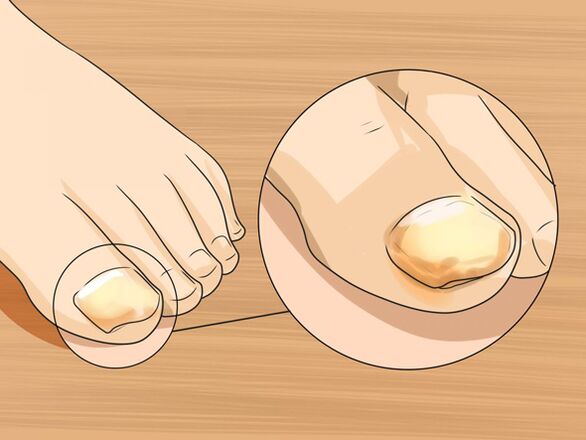
Ingrown corners of the big toenail are additional symptoms of infection.This is how the deformation of the horny plate manifests itself.Pain occurs when walking, which can cause suppuration.With the further development of the disease, the nail loses its original appearance.The surface of the nail becomes dull, significantly thickens, becomes covered with spots or stripes of yellow, brown, black shades and becomes brittle and brittle.Without treatment, the big toe nail is destroyed and separated from the nail bed.
The types of lesions are influenced by the strains of the infecting flora.The yeast fungus changes the appearance of the cushion and colors the thumbnail in yellow and brown tones, followed by its separation.Dermatophytes are characterized by the presence of spots or longitudinal bands of predominantly yellowish hues along the edges and in the center of the nail.Mold appears in a shade ranging from greenish to almost black.
Dermatologists divide toenail diseases into types:
- Normotrophic.Mild symptoms: the condition remains the same, the first signs appear on the surface: stripes or spots ranging from white to yellow.Subsequently, the color changes completely.
- Hypertrophic.Discoloration (grayish brown) is accompanied by loss of shine, dullness, thickening and deformation with partial destruction mainly at the edges.
- Onycholytic.It is characterized by a dull brown-gray discoloration of the affected nail, covering it with loose layers of hyperkeratotic properties, atrophy and rejection.There is a maximum danger due to the massive spillage of micro-organisms on the floors of the premises used.
The fungus not only harms the big nail.The toxins released, due to the vital activity of the fungus, enter the lymphatic system, causing the appearance of allergic reactions (hypersensitivity), aggravating the causes of disorders in the gastrointestinal tract and signs of intoxication appear.
Conservative treatment of thumb fungus and its varieties
The main treatment for thumbnail fungus is complex therapy, combining methods of local-external and curative approaches.It is chosen by a dermatologist taking into account the degree of progression of the disease, the individual tolerance of the patient and the affected area.The duration of the course depends on the negligence and complexity of the infectious disease.
External use
At the very beginning, the fungus responds to gentle methods.Medicinal varnishes of a special composition against the spread of nail fungus are sold on the over-the-counter shelves of pharmacies.Penetrating into the structure of the nail plate, they have an antiseptic effect, soften the stratum corneum and destroy infectious spores, destroy the mycelium of the fungus.
The damaged area is treated with the obligatory presence of an ointment, spray or cream.Treatment must begin, as with varnishes, with careful preparation of the infected area: maximum cutting of the nail, thinning with a file, degreasing.The product is intended to be used once or twice daily for 2 to 12 months.To avoid relapses, it is recommended to continue using medications for two weeks after recovery.
Ointments are used depending on the stage of the infection.They contain different components: ciclopiroxolamine, ketoconazole, naftifine and terbinafine.Based on these indicators, a specific drug that destroys the fungus is selected for the patient.Based on the results, terbinafine derivatives were recognized as the most effective.The destruction targets the membranes of the fungal strains, resulting in the destruction of the latter from the inside.
When it is necessary to remove a diseased nail from the big toe, apply a compress with a solution to soften it.Other medications (5% salicylic ointment) are also used for this purpose.
Internal medicine (tablets)
For the onycholytic type of the disease, complex treatment is prescribed.Along with external procedures, it is necessary to take systemic antifungal tablets.With oral medications, special attention is required, as there are restrictions and contraindications for use.Only a dermatologist will correctly select a drug that suppresses the fungus.
The dosage involves the use of one tablet once a day or once a week, for 2 to 6 months.
Traditional medicine recipes
At the normotrophic stage, folk recipes have proven themselves.At home, it is possible to do without expensive medications by independently treating the fungus without harming the general health of a person.
Iodotherapy
- For a week, the affected thumbnail is smeared with a cotton swab twice a day.After which there is a break for the same period and the procedure is repeated in the same order until the fungus is eliminated.
- Three liters of hot water are poured into the container, eight drops of alcohol tincture of iodine are added.After bathing, the steamed plate is cut off, the skin is treated with hydrogen peroxide and a bandage with an antibacterial drug is applied.The procedure should be carried out daily until the skin is renewed.
Tips with vinegar
- In a glass bowl, mix equal parts table vinegar, glycerin and water.Apply the compress for 20 minutes morning and evening, daily until the nail is completely replaced.
- In a bowl, dilute two parts water and one part 9% table vinegar.Soak the affected limb for 15 minutes, then trim and file the affected nail as much as possible.Perform every day for 2 consecutive weeks until the stratum corneum is renewed.